
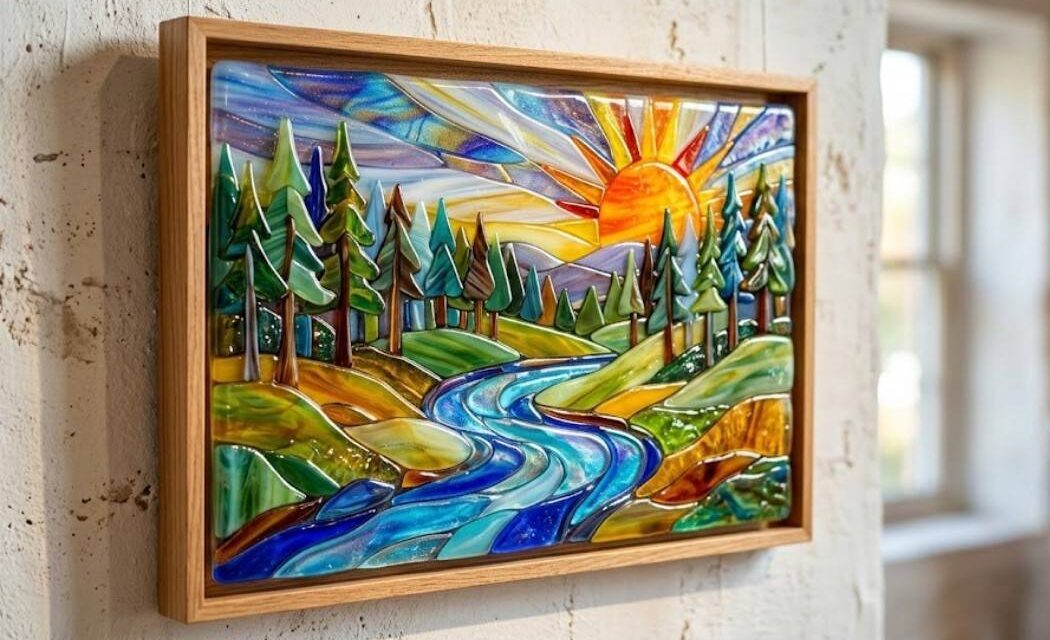
If you are searching for “how to fuse glass at home,” “beginner fused glass techniques,” or “fused glass ideas 2026,” you are exploring one of the most visually compelling and technically rewarding art forms in contemporary design.
Fused glass art combines precision, creativity, and controlled heat to transform flat sheets of glass into decorative and functional works. From handcrafted bowls and jewelry to architectural wall panels, kiln-formed glass continues to gain recognition among artists, designers, and collectors.
This guide explains essential techniques, materials, and design inspiration while offering insight into its growing relevance in modern interiors.
Understanding Fused Glass Art
Fused glass, also known as kiln-formed glass, is created by layering compatible pieces of glass and heating them in a kiln until they permanently bond. Unlike stained glass, which uses metal frameworks to join pieces, fused glass relies entirely on heat to create structural unity.
The process typically occurs at temperatures between 1,400°F and 1,500°F. By adjusting peak temperature and holding time, artists control surface texture, clarity, and dimensional depth.
Fused glass is widely used for decorative wall panels, contemporary bowls and plates, handmade jewelry, architectural installations, and personalized art pieces. Its adaptability makes it suitable for both artistic exploration and commercial production.
Essential Tools and Materials for Glass Fusing
Successful glass fusing begins with compatible materials and reliable equipment. The most important technical requirement is ensuring that all glass components share the same coefficient of expansion, commonly COE 90 or COE 96. Mixing incompatible glass can cause cracking during cooling.
Core Equipment
Professional fused glass work typically requires:
- A programmable kiln with precise temperature control
- A glass cutter and running pliers
- Kiln shelf paper or fiber paper
- Safety glasses and protective gear
- Fusible glass sheets, frit, and stringers
A programmable kiln is essential because the annealing cycle, which involves controlled cooling, prevents internal stress and enhances durability.
Core Fused Glass Techniques
Mastering technique is fundamental to producing refined work. The following methods form the foundation of kiln-formed glass artistry.
Full Fusing
Full fusing melts layered glass completely into a smooth and unified surface. This technique produces a glossy finish and is ideal for pendants, tiles, coasters, and minimalist decorative panels.
Because of its predictable results, full fusing is often recommended for beginners.
Tack Fusing
Tack fusing heats glass to a slightly lower peak temperature so individual elements retain texture and dimensional relief. Instead of forming a flat surface, layers remain slightly raised, adding visual depth.
This method is frequently used in contemporary wall art where light interaction enhances the overall composition.
Slumping
Slumping is a secondary firing process that shapes fused glass over a mold. After a flat piece is fused, it is reheated at a lower temperature and gently formed into bowls, dishes, or curved forms.
This technique allows artists to combine decorative appeal with practical functionality.
Decorative Surface Applications
Surface detailing significantly enhances fused glass design. Artists may incorporate frit, metallic accents, layered transparencies, or fine stringer patterns to create intricate compositions.
The interaction between transparent and opaque glass creates dynamic lighting effects, particularly in well-lit interior spaces.
Step by Step Overview of the Fusing Process
For beginners exploring glass fusing at home, the process typically follows a structured workflow:
- Select compatible fusible glass materials.
- Clean each piece thoroughly to remove dust and oils.
- Arrange the composition carefully on kiln-prepared shelves.
- Program the kiln using an appropriate firing schedule.
- Allow controlled annealing to prevent thermal stress.
- Conduct secondary shaping if required.
Precision in temperature management is critical. Many common issues such as cracking or surface imperfections result from improper cooling or material incompatibility.
Design Trends and Creative Inspiration in 2026
Contemporary fused glass design reflects broader interior and architectural trends. Current preferences emphasize earth-inspired color palettes, organic asymmetry, minimalist geometric layouts, and subtle metallic highlights.
Interior designers increasingly incorporate kiln-formed glass into residential and hospitality environments. Its ability to capture and refract light makes it particularly effective as a visual focal point.
Layered translucency remains a dominant design element because it adds depth while maintaining elegance and simplicity.
The Growing Role of Fused Glass in Dubai’s Design Landscape
In design-focused cities such as Dubai, fused glass is gaining visibility within luxury interiors and bespoke décor projects. Modern villas, hospitality venues, and commercial spaces increasingly feature kiln-formed glass panels and custom installations.
The demand for personalized decorative elements aligns naturally with fused glass capabilities. Designers often prefer geometric patterns and metallic accents that complement contemporary architecture.
Understanding local aesthetic preferences and maintaining high production standards can strengthen positioning in this market.
Common Challenges in Glass Fusing
Even experienced artists encounter technical difficulties. Cracking often occurs due to incompatible glass or insufficient annealing. Air bubbles may form when layers trap air during firing. Surface cloudiness, known as devitrification, can result from firing inconsistencies.
Maintaining detailed firing records and carefully monitoring kiln schedules significantly improves consistency and quality.
Commercial Potential of Fused Glass Art
Fused glass offers strong commercial viability when positioned professionally. Revenue opportunities include custom décor commissions, artisan exhibitions, online bespoke orders, and collaboration with architects and designers.
Success depends not only on technical skill but also on branding, presentation, and professional positioning. Treating fused glass as a contemporary design discipline elevates both perception and market value.
AI Overview
Fused glass art uses kiln heat to bond layered glass into decorative and functional pieces. Growing in Dubai interiors, it offers modern, customizable designs for luxury homes and commercial spaces in the UAE.
FAQs
What is fused glass art?
Fused glass art is created by layering compatible glass and heating it in a kiln until it bonds into decorative or functional pieces.
Can beginners fuse glass at home?
Yes, beginners can fuse glass at home using a small kiln, compatible glass, and proper safety precautions.
Is fused glass popular in Dubai interiors?
Yes, fused glass is widely used in Dubai for luxury décor, wall panels, and customized interior design features.
Where can I buy fused glass products in Dubai?
For quality fused glass products in Dubai, you can explore trusted suppliers like Al Lamsah offering modern designs at competitive prices.
Conclusion
Fused glass art represents a refined blend of scientific precision and creative expression. Through controlled heat and thoughtful composition, solid sheets of glass transform into luminous and enduring works.
If you are living in Dubai and looking for reliable fused glass products at competitive prices, consider exploring Al Lamsah for quality selections suited to modern interiors. Choosing a trusted supplier ensures durability and refined aesthetic standards for your glass décor projects.
Explore Our Related Glass Services
- What Is Back Painted Glass and Its Uses?: A sleek and modern solution for walls, kitchens, and commercial interiors.
- What Is Stained Glass? History, Process and Modern Uses: Discover the timeless artistry and its role in contemporary design.
- What Is Acid Etched Glass? Benefits and Applications: An elegant choice for privacy and refined interior aesthetics.
- What Is UV Glass Printing? A Beginner’s Guide: Learn how vibrant and customized glass designs are created.
- How Mirrors in Interior Design Can Transform Your Space: Enhance light, space, and visual appeal in modern interiors.