
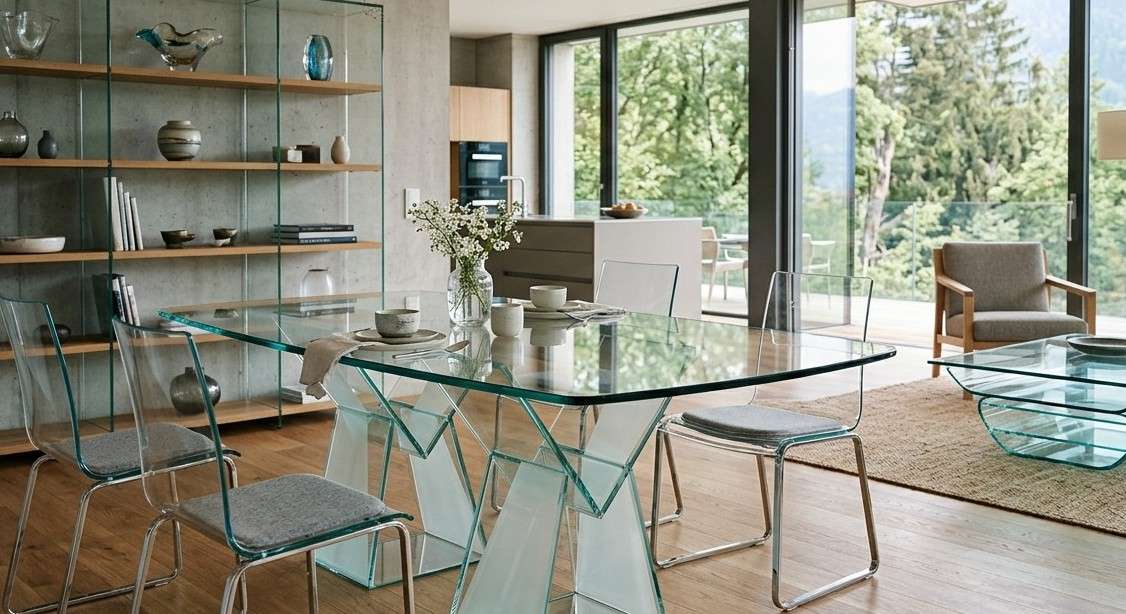
The most common mistakes when ordering custom glass furniture are choosing the wrong glass thickness, skipping tempered or laminated safety glass, ignoring edge finish options, measuring dimensions inaccurately, and overlooking delivery and access logistics. Getting these details right keeps the finished piece safe, functional, and free of costly refits.
Whether you’re sourcing bespoke glass furniture in Dubai for a home or an office, the process is one of the more visible upgrades to a space, but also one of the easiest to get wrong if the details are rushed. Here are the five mistakes that come up most often, and how to avoid them.
1. Choosing the Wrong Glass Thickness
One of the most common mistakes in custom furniture orders is treating glass thickness as a single standard, instead of a spec that changes with the piece’s size, load, and use.
The Friction: The table looks fine on delivery day, then a few weeks in it starts flexing under normal weight, or a corner chips on first contact. By then the piece is already installed and the fix means a full replacement, not a touch-up.
The Fix: A dining table top, a coffee table, and a decorative shelf panel each carry different loads and need different thickness ranges. Get a thickness recommendation from your fabricator based on the exact size and use of the piece, not a generic number pulled from a catalog.
2. Skipping Tempered or Laminated Safety Glass
One of the easiest mistakes to make is assuming all glass furniture is equally safe, when standard annealed glass and tempered glass look identical once installed but behave completely differently if the piece is impacted.
The Friction: Buyers assume they’re getting the safer option by default. The difference only becomes obvious when the piece breaks, and annealed glass shatters into large, sharp shards instead of small, blunt pieces.
The Fix: Confirm in writing whether the glass being quoted is tempered or laminated safety glass, especially for tables in daily use, homes with kids or pets, and shelving above eye level. Ask for documentation if the piece needs to meet safety standards for a commercial space.
3. Ignoring Edge Finish Options
One of the quieter mistakes is treating edge finishing as a cosmetic upsell rather than a functional spec, which makes it the first thing a cheaper quote tends to leave out.
The Friction: A raw or roughly polished edge chips easily and can be sharp enough to cause injury, and it’s usually only noticed after the piece is already in the room.
The Fix: Specify the edge finish, flat polished, pencil polished, or beveled, in writing at the quoting stage, not as an assumption. When comparing prices between suppliers, make sure you’re comparing the same edge treatment, not just the base glass cost.
4. Inaccurate Measuring and Sizing
One of the most avoidable mistakes is treating a single rough measurement as good enough for a piece that will be cut to exact dimensions.
The Friction: A soft tape measure, a single measurement instead of checking multiple points, or an uncheck-for-square corner can leave a piece that doesn’t sit right in its frame or slot. A gap of a few millimeters is enough to cause a misfit.
The Fix: Measure with a rigid steel tape, check width and length at more than one point, and have the fabricator confirm final dimensions before the glass is cut, not after.
5. Overlooking Delivery and Access Routes
One of the most overlooked mistakes is treating delivery as a formality instead of a design constraint, when the size of a doorway or elevator can decide what glass can physically reach the room.
The Friction: A piece that’s cut, finished, and ready to install still has to physically get into the room. Doorways, hallway turns, elevators, and staircases can all limit what size of glass makes it in one piece, and this only gets discovered on delivery day, when options are limited and expensive.
The Fix: Measure doorways, hallway width, and any turns the glass will need to pass through before finalizing a large custom piece, and flag it to your fabricator early so they can plan for it, including sectioned pieces if needed.
Quick Checklist Before You Order
- Confirm the recommended glass thickness for your specific furniture type and size.
- Ask directly whether the glass is tempered or laminated safety glass.
- Get edge finishing specified in writing, not left as an assumption.
- Measure dimensions with a rigid tape at multiple points, not just once.
- Check doorways, hallways, and elevators for access before ordering large pieces.
Make Something Extraordinary
At Al Lamsah Al Shafafah, we believe in the power of a clean cut and a polished edge. We’ve been fabricating custom glass in Sharjah since 2006, so the thickness, the tempering, the finish, it’s checked before it ever leaves our workshop, not left for you to discover later. No vague quotes. No cut corners. Just glass done right.
Ready to bring your custom piece to life? Let’s turn your glass furniture project into the part that just works.
Get a Quote or Contact Our Team Today
Keep Exploring: More Custom Glass Reads
- What Is Bespoke Glass Furniture? A Beginner’s Guide — Start here if you’re new to custom glass and want the basics first.
- 7 Smart Ways to Transform Workplaces with Bespoke Glass Furniture — See how the right pieces change an office, not just furnish it.
- Acid Etched Glass: Elegant Solutions for Light and Privacy — A softer, frosted alternative worth considering alongside your furniture plans.
- Top 10 Decorative Mirror Ideas for Luxury Interiors — Pair your glass furniture with statement mirrors that pull a room together.
- 7 Best Aluminium Handrail Companies in Dubai — For projects that need glass and metalwork working side by side.