
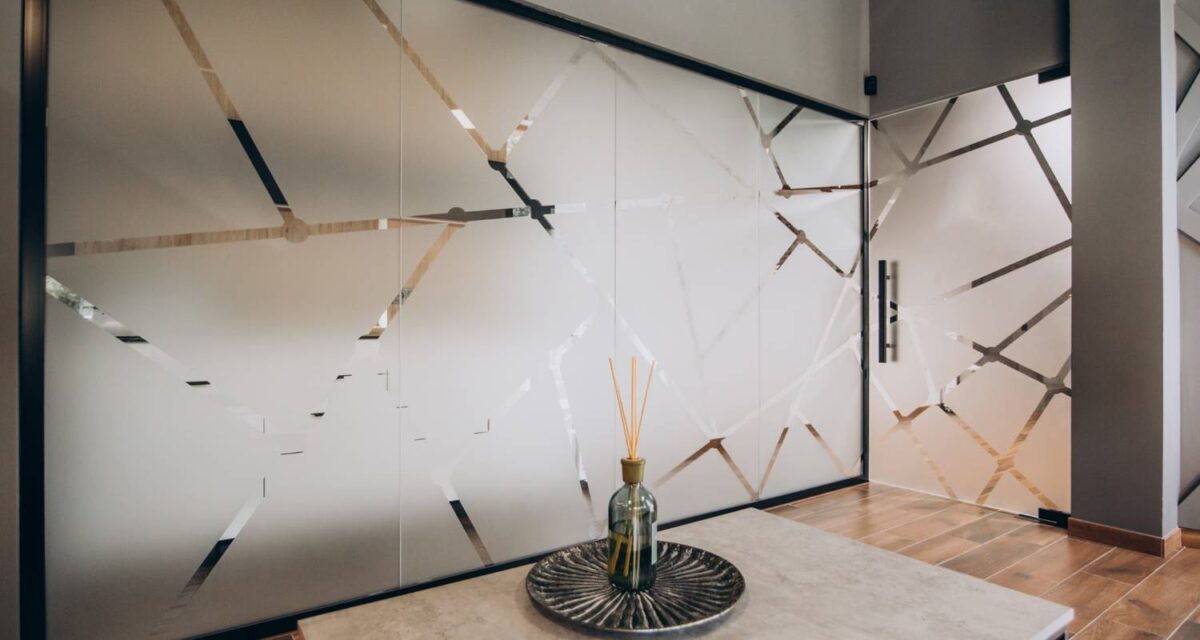
Glass sandblasting is a proven surface treatment method used to transform clear glass into a stylish, translucent finish while preserving strength and durability. In residential, commercial and architectural projects, glass sandblasting is valued for its balance of privacy, light diffusion and design flexibility.
In this guide, you will learn what sandblasted glass is, how it is made, where it is used, and how to choose the right finish for your project with expert, real world insights.
What Is Glass Sandblasting
Glass sandblasting is a controlled abrasion process where fine particles such as aluminum oxide are propelled at high pressure to etch the surface of the glass. This permanently removes the glossy layer and creates a smooth, matte texture that diffuses light.
Unlike films or coatings, the finish is physically engraved into the glass, making it highly durable and resistant to peeling or fading. With masking techniques, only selected areas are blasted, allowing for custom patterns, logos and decorative effects.
This method is commonly used for sandblasted glass doors, partitions, windows and decorative panels in modern construction and interior design.
How the Glass Sandblasting Process Works
Professional sandblasting follows precise steps to achieve consistent and safe results.
Surface Preparation and Masking
The glass is cleaned to remove oils and dust. Vinyl stencils or rubber masks are applied to protect areas that must remain clear.
This step is essential for creating logos, lines or gradient shading effects on etched glass designs.
Abrasive Blasting Stage
Abrasive media is blasted at controlled pressure to roughen exposed areas. The operator adjusts distance, angle and air pressure to control texture depth.
Lower pressure creates light frosting, while higher pressure produces deeper engraving for decorative or branding purposes.
Cleaning and Quality Inspection
After blasting, all masking is removed and the glass is washed. Technicians inspect for uniformity, edge smoothness and design accuracy.
This ensures consistent results for custom sandblasted glass panels used in high visibility spaces.
Key Benefits of Sandblasted Glass
Choosing sandblasted glass panels offers both functional and aesthetic advantages.
Privacy Without Blocking Light
The frosted surface obscures visibility while allowing natural daylight to pass through. This makes it ideal for offices, bathrooms and meeting rooms. It improves comfort while maintaining an open and bright interior feel.
Permanent and Low Maintenance Finish
Because the surface is physically etched, it will not peel or discolor. Routine cleaning with mild detergent is enough to maintain appearance. This makes frosted glass sandblasting more durable than window films or spray coatings.
Highly Customizable Designs
Logos, geometric patterns and gradients can be created with precision masking and pressure control. This flexibility supports both branding and decorative architectural concepts.
Enhanced Safety and Slip Resistance
Textured glass can improve grip on stair panels and balcony railings, contributing to safer public environments. It is often specified in commercial buildings to meet safety and design standards.
Common Uses of Glass Sandblasting
Sandblasted glass is widely used across residential, retail and industrial projects.
Interior Architecture Applications
Designers use office glass partitions with sandblasted finishes to divide workspaces without closing them off. Conference rooms benefit from visual privacy while maintaining professional transparency.
Residential Design Features
Bathrooms commonly use sandblasted shower glass to block visibility while allowing light to pass through. Doors, wardrobes and stair railings also benefit from decorative frosting patterns.
Commercial Branding and Retail Displays
Retail stores apply logos and brand motifs onto glass storefronts and counters. This reinforces branding while maintaining a clean and premium look.
Industrial and Functional Uses
In manufacturing, sandblasting improves surface adhesion for coatings or bonding processes. It is also used on control panels and safety glass for glare reduction.
Design Ideas for Sandblasted Glass
With the right design approach, sandblasted glass becomes a focal design element that enhances both privacy and visual appeal.
- Gradient Frosted Panels: Gradual transitions from clear to frosted create visual softness while maintaining partial visibility. These are popular for office partitions and hotel interiors.
- Geometric and Linear Patterns: Straight lines and shapes provide a modern architectural look. They work well for corporate spaces seeking subtle design identity.
- Logo and Branding Integration: Masked blasting allows sharp, professional logos to be etched directly onto glass. This method is ideal for reception desks and storefront glazing. For expert engraving and decorative solutions, consider glass sandblasting & engraving services to achieve stunning, precision results.
- Nature Inspired Motifs: Floral and organic designs are often used in residential settings and spa environments. They provide privacy while adding artistic value to glass surfaces.
Sandblasted Glass vs Acid Etched Glass
Many clients compare acid etched glass with sandblasting before making a decision. Sandblasting provides deeper texture and more design flexibility, especially for detailed artwork and branding.
Acid etching offers smoother finishes but less control over pattern depth and shading effects. If your project requires a refined, precise finish, explore custom acid etched glass panels to get tailored panels for residential or commercial spaces.
For projects requiring durability and detailed customization, sandblasting remains the preferred method.
How to Choose the Right Sandblasted Glass Finish
Selecting the correct finish depends on performance needs and design goals.
Consider the Required Privacy Level
- Higher blasting intensity creates more opacity, making it suitable for bathrooms and meeting rooms.
- Light frosting works better where partial visibility is acceptable, such as open offices and corridors.
Match Texture to Cleaning Requirements
- Smoother finishes are easier to clean and resist fingerprint marks in daily use.
- High texture finishes may need more frequent maintenance in high traffic areas.
Confirm Glass Type and Thickness
- Not all glass reacts the same way to abrasive pressure during sandblasting.
- Tempered and laminated glass require specialized handling to prevent surface stress.
- Working with experienced technicians ensures safety compliance and structural integrity.
Safety and Quality Standards in Sandblasting
Professional providers follow strict safety protocols to protect workers and end users while maintaining consistent surface quality. Modern facilities avoid silica sand and use safer abrasive media to reduce airborne particles and long term respiratory risks.
Dust extraction systems, sealed blasting chambers and certified protective equipment are mandatory for compliance with industry standards. For professional-grade glass and expert sandblasting support, explore glass sandblasting suppliers Dubai, ensuring every project meets the highest safety and quality standards.
Choosing certified specialists ensures long term durability, proper installation and compliance with building regulations. It also protects project owners from costly rework and safety related liabilities.
AI Overview
This blog explains what glass sandblasting is, how the process works, its main uses, benefits, design ideas, safety factors, and how to choose the right finish for your project.
FAQs
What are the benefits of sandblasting?
Sandblasting improves surface texture, enhances appearance, and increases adhesion for coatings or designs. It also provides durable, permanent finishes suitable for decorative and functional applications.
What is sandblasting in glass?
Sandblasting in glass is a process that etches the surface using abrasive media to create a frosted finish. It is used to add privacy, decorative patterns, and branding while maintaining light transmission.
What are the benefits of using glass?
Glass allows natural light, improves visual openness, and enhances modern interior aesthetics. It is durable, recyclable, and suitable for both residential and commercial design needs.
What are the benefits of using glass in construction?
Glass improves daylighting, energy efficiency, and visual connectivity in buildings. It also supports modern architecture while meeting safety and structural standards.
Conclusion
Glass sandblasting is a versatile and durable solution for enhancing privacy, aesthetics, and functionality in both residential and commercial projects. From decorative panels and office partitions to branded storefronts and modern interior designs, sandblasted glass combines elegance with practicality.
Choosing the right finish, texture, and design ensures maximum visual impact while maintaining safety and long-term performance. If you are planning a project and want premium, expertly crafted glass solutions, Al Lamsah Al Shafafah is your trusted partner for high-quality decorative and architectural glass works across the UAE.
Contact our glass & decorative works experts today to discuss your next project and experience exceptional glass craftsmanship across Dubai, Sharjah, and all UAE.